
Introduction
The Summer Palace is located about 20km away from the Forbidden City of Beijing. The history of the Summer Palace is closely linked to that of the Empress Dowager Cixi who, for all practical purposes, ruled the Qing Dynasty for nearly 40 years. The Empress Dowager is referred to by the Chinese as the Dragon Lady. Her reign is known as the reign of blood because of all the people she had murdered to retain power.
Cixi became the Empress Dowager following the death of her husband during the second Opium War in 1861. The idea had been for her to reign until her son was old enough to take over power. But when the time came, the Empress Dowager was reluctant to hand over power and instead had her son murdered. She then appointed one of her nephews to be the new emperor. He was only three years of age, which bought her some time before he too would make a rightful claim to the Dragon Throne, requiring her to relinquish power. Tragically, the little boy did not last very long and the Empress Dowager eventually had him murdered as well.
Dragon Lady then nominated a little boy that went by the name of Aisin-Gioro Pu Yi, also aged three at the time, to ascend to the Dragon Throne. Which eventually he did, but only because the Empress Dowager died a little while after she made the nomination. Pu Yi went on to become the last Emperor of China. He died in 1967 in Beijing, as a simple gardener of the People’s Republic of China.


Modern China has a somewhat ambivalent attitude towards its historical sites and monuments. On the one hand, places like the Empress Dowager’s Summer Palace or the Forbidden City in the heart of Beijing are identified as key symbols of what was considered an unjust political systems that the socialist revolution intended to topple. On the other hand, though, the attraction of these sites for tourists and the revenues they generates is hard to resist.
Aman Summer Palace
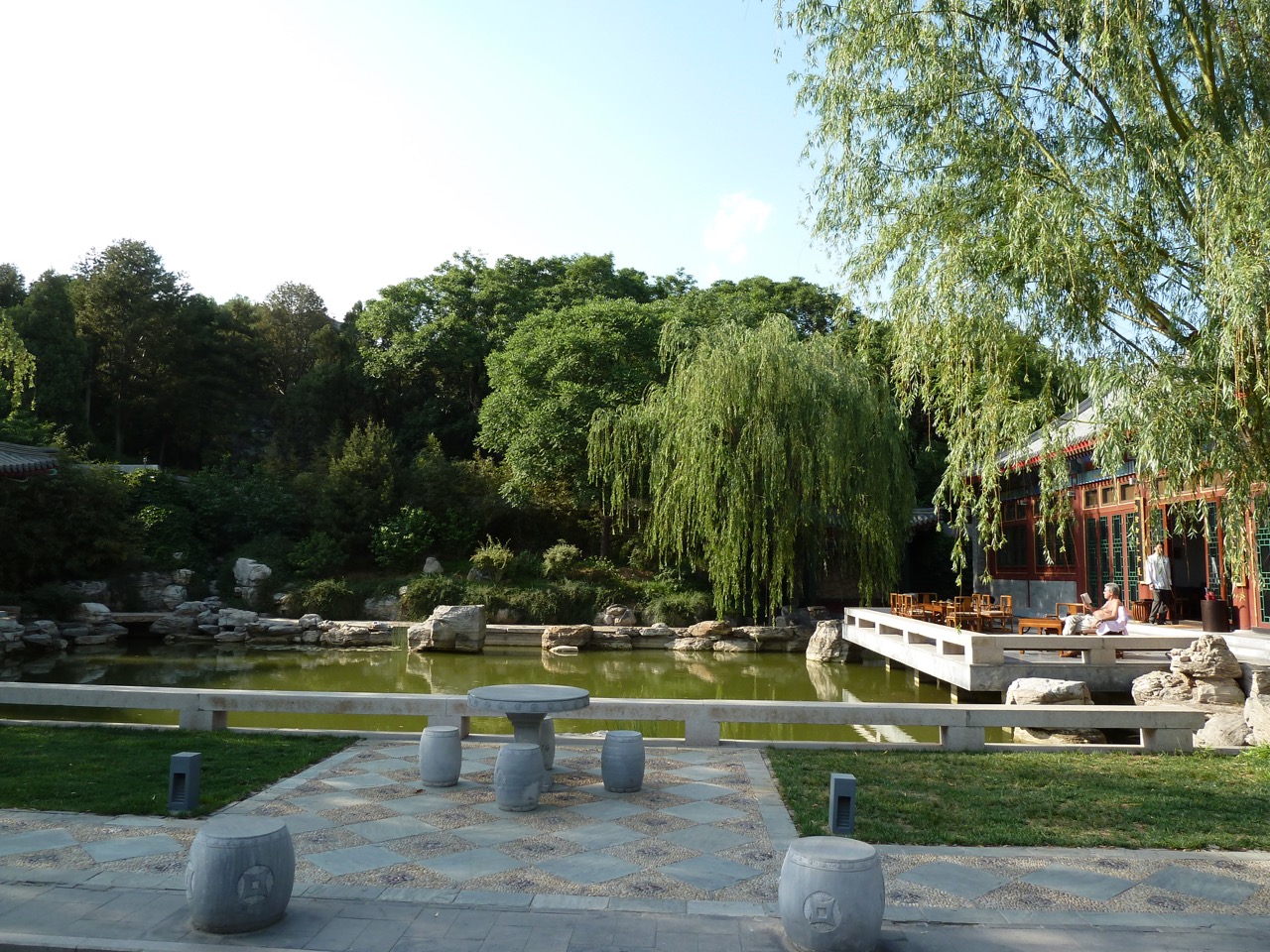
Today, the part of the Imperial Summer Palace that used to house the royal kitchens has been converted into a luxury hotel property managed by the Aman group of hotels. Apart form the fact that this certainly is a very nice property, guests have the added benefit of having access to the imperial gardens even after they have closed to the public for the day. The grounds of the palace are never really crowded, I think, but it’s still a very unique atmosphere to be able to able around at dusk in solitude.


